BURGER BOX BALL:HAMBURGER SCORING THAT KIDS LOVE!
The best games are the ones that kids can play, and run themselves. The kind where they make decisions, keep score, wait for others, and manage the flow without constant adult direction. When students can do that, something powerful happens: the game becomes theirs and learning happens.
That’s exactly why I love this alternative to traditional four square; it builds independence while still being incredibly fun, especially for our younger students.
BURGER BOX BALL: A FOUR SQUARE ALTERNATIVE
This game uses what I call “hamburger scoring,” and it’s one of the simplest, most accessible ways to keep score. It feels playful and low-pressure, which makes it perfect for elementary students.
As a bonus, it sneaks in some great fine motor and occupational therapy skill work.
I’ve used this scoring system across multiple activities: Basketball for tracking shots, soccer for goals, and plenty of small-sided games in between. It’s versatile, engaging, and easy for kids to understand.
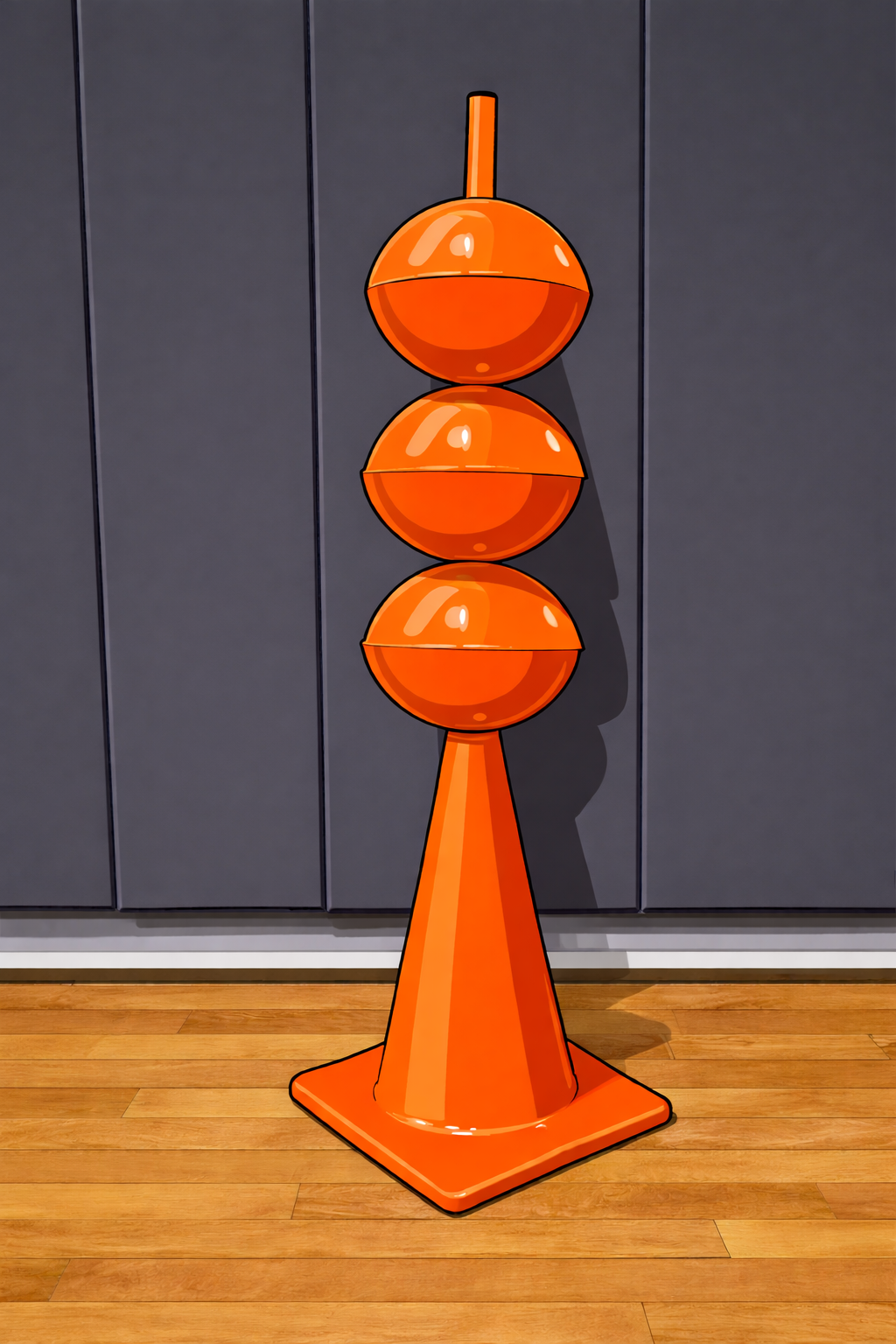
To set up, you can use a PVC pipe or something similar. I like using wands paired with cone bases to create a vertical “stacking” system.
Take a PVC pipe, or I use these Wands from Gopher and these Rounded Cone Markers from US Games, inserted into 18” cones. You’ll get 3 hamburgers out of this setup (one bottom bun + one top bun = 6 points). These multi-domes also work great. You can expand scoring to 5 hamburgers for a total of 10 points. Perfect for 3rd and 4th graders!
GAME SETUP & PLAY

Divide students into teams, lined up behind their “hamburger stick.”
Start with no cones on the stick.
Set up the play area with two cones in the front, two in the back, and one on each side.
Use floor markers or stickers to show exactly where domes belong, this helps keep things organized.
Students bounce and strike the ball with an open hand into the opposing team’s box, aiming to make it difficult to return.
If the receiving player catches or stops the ball before it leaves their box, play continues, no points scored.
If the ball exits the opponent’s box without hitting a dome, the scoring player earns a bun to add to their stack. They can choose any cone from their side to add.
If a team gets scored on, a new player rotates into the Burger Box.
The player who scores stays in until a point is scored against them.
If the ball hits a dome during play, that team gets to add that dome to their stack.
One important expectation: the game doesn’t start until everyone is ready.
Games like this remind me that sometimes the goal isn’t just activity; it’s autonomy. When we give kids the structure and tools to manage play themselves, we’re building skills that go far beyond the gym.
Keep on,
Katie